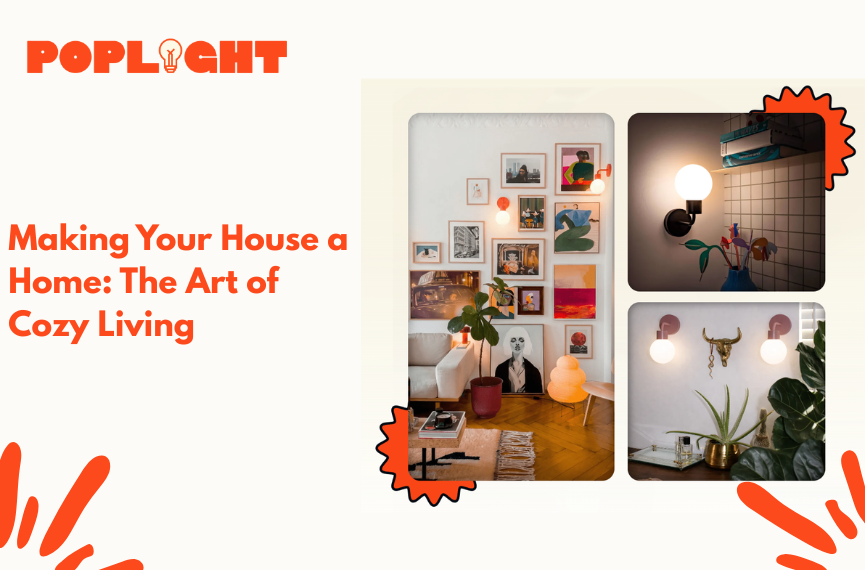
Making Your House a Home: The Art of Cozy Living
By Zayam AR
Published on 2026-01-13 17:20:00
Transform your home into a cozy sanctuary with layered lighting and renter-friendly wall sconces like Poplight no drilling required.
Your home is more than just a place to sleep. It is your sanctuary, the backdrop to your memories, and a reflection of your personality. Creating a space that feels truly yours—a space that feels cozy and welcoming—is one of the most rewarding parts of making a home. It doesn't require a huge budget or a complete renovation. Often, it’s the small, thoughtful touches that make the biggest difference.
This is a story about transforming a space, one small upgrade at a time. It’s about learning to embrace the home you have, whether you're renting an apartment or own your house, and infusing it with warmth and character. It’s about discovering the art of cozy living through simple, meaningful changes.
We will explore how intentional design choices, particularly with lighting, can elevate your home from just a place you live to a place you love. Let’s explore how to make your space feel like a warm hug at the end of a long day.
The Journey to a Cozier Home
When I first moved into my apartment, the white walls and generic overhead lighting felt sterile and impersonal. It was a functional space, but it lacked a soul. I knew I wanted it to feel different, to feel like me. But as a renter, my options felt limited. I couldn't paint, I couldn't change the light fixtures, and I certainly couldn't start any major projects.
My initial attempts at decoration were simple. I added a few throw pillows, a soft blanket over the sofa, and some of my favorite books on a shelf. These things helped, but the room still felt cold, especially at night. The single, harsh ceiling light cast long shadows and created a stark, unwelcoming atmosphere. It became clear that the key to creating the cozy vibe I craved was getting the lighting right.
I started with floor lamps and table lamps, which added pockets of warmth. Yet, they took up precious space and added to the visual clutter of cords. The core problem remained: the walls were blank canvases, and the light was one-dimensional.
A Small Change with a Big Impact
The real transformation began when I discovered the power of layered, ambient lighting. I wanted the soft glow of wall sconces, the kind you see in boutique hotels and perfectly curated design magazines. But as a renter, hardwired options were out of the question.
My search led me to a simple yet brilliant solution: rechargeable, stick-on wall lights. I came across Poplight, a brand started by a couple who faced the same problem. Their lights could be installed in seconds without any tools and, most importantly, without any damage to the walls. It felt like the perfect answer.
I started with a single light in a warm Marigold color next to my favorite armchair. The installation was effortless. I peeled the adhesive, used the built-in level to position it, and stuck it to the wall. The moment I turned it on, the corner was transformed. It became a designated reading nook, bathed in a soft, inviting glow. This small upgrade had an outsized impact, making the entire living room feel warmer and more intentional.

Buy Now
Cultivating Coziness: Simple Steps for Any Space
Creating a cozy environment is a personal journey, but there are some universal principles you can apply to any home. It’s about engaging the senses and building layers of comfort.
1. Embrace Warm, Layered Lighting
Lighting is the single most effective tool for setting a mood. Instead of relying on one overhead light, create layers of light at different heights.
-
- Ambient Light: This is the overall illumination of a room. Soft, warm light is key. Dimmable, app-controlled wall sconces can provide a beautiful ambient glow that you can adjust from your phone.
- Task Light: This is a focused light for specific activities, like reading or cooking. A well-placed wall light over a desk or beside a bed is a perfect example.
- Accent Light: This type of lighting highlights specific features, like a piece of art or a plant. It adds depth and visual interest to a room.
- Ambient Light: This is the overall illumination of a room. Soft, warm light is key. Dimmable, app-controlled wall sconces can provide a beautiful ambient glow that you can adjust from your phone.
2. Introduce Soft Textures
Incorporate a variety of textures to make your space feel more comfortable and inviting. Think about materials that are pleasant to touch.
-
- Plush throw blankets on the sofa
- A soft rug underfoot
- Velvet or linen cushion covers
- Woven baskets for storage
- Plush throw blankets on the sofa
3. Personalize Your Space
Your home should tell your story. Display items that are meaningful to you and bring you joy.
-
- Create a Gallery Wall: Mix and match framed photos, art prints, and personal mementos. Modern wall lights can be used to illuminate your gallery, turning it into a beautiful focal point.
- Display Your Collections: Whether you collect plants, books, or pottery, arrange them in a way that feels curated and personal.
- Incorporate Scent: Scent is strongly tied to memory and emotion. Use candles, diffusers, or fresh flowers to add a pleasant fragrance to your home.
- Create a Gallery Wall: Mix and match framed photos, art prints, and personal mementos. Modern wall lights can be used to illuminate your gallery, turning it into a beautiful focal point.
My Poplight Story: Beyond the Living Room
After the success of my living room reading nook, I was inspired. I saw other areas in my apartment that could benefit from a little glow-up.
Next was the bedroom. My nightstand was cluttered with a lamp, a book, and a glass of water. I replaced the lamp with a sleek, Dusty Rose Poplight on the wall above it. This instantly freed up space and created a serene, hotel-like atmosphere. Using the app, I could dim the light for winding down and set a sleep timer so it would turn off automatically.
Even my dark, narrow hallway got an upgrade. It had no outlets, making a lamp impossible. I installed a single Poplight in a soft Mushroom color at the end of the hall. It now casts a welcoming glow, making the entire apartment feel more connected and less disjointed.
These small, damage-free additions have fundamentally changed how I experience my home. They’ve allowed me to customize my space in a way I never thought possible as a renter, proving that you don’t need to own your home to make it your own.
Your Home, Your Sanctuary
Creating a cozy home is an ongoing act of love and creativity. It’s about paying attention to how your space makes you feel and making small, intentional adjustments.
Start with one corner. Add a plant, a comfortable chair, and a source of warm light. See how it changes the feel of the room. You have the power to shape your environment, to build a sanctuary that nurtures and inspires you every single day. You don't need a big budget or your landlord's permission to start living more cozily today.

Buy Now
Frequently Asked Questions
What is the best way to make a room feel cozy?
The key is to use warm, layered lighting. Instead of one harsh overhead light, use multiple light sources like lamps and wall sconces at different heights. Also, incorporate soft textures like blankets and rugs, and personalize the space with art and photos.
How can renters improve their lighting without damaging walls?
Rechargeable, stick-on wall sconces are an excellent solution. Products like Poplight adhere to the wall with damage-free tape and are battery-powered, so they require no tools, drilling, or wiring. They can be removed easily when you move.
What kind of light is best for creating a relaxing atmosphere?
Warm-toned light (around 2700K) that is dimmable is best for relaxation. It mimics the glow of candlelight or a sunset. Many smart lights, including Poplight, allow you to adjust both the brightness and color temperature to create the perfect vibe.
How can I make a small apartment feel cozier?
In a small space, using walls for lighting is a great strategy. Wall-mounted sconces free up valuable floor and table space. Using mirrors to reflect light can also make a room feel larger and brighter. Stick to a warm, cohesive color palette to create a sense of calm.
Are battery-powered lights a good long-term solution?
Yes, they can be. Modern rechargeable lights offer long battery life (up to 9 hours on a single charge) and are easily recharged with a standard USB-C cable. For continuous use, you can get extra battery packs to swap in as needed, making them a very practical choice.
Sign Up For the Affinora Newsletter
Exclusive product reviews, expert workout tips, and more, delivered to your inbox daily.
By signing up, I agree to the Terms and Privacy Policy.
How DesignFiles Helps Interior Designers Save Time and Boost Profits
By Zayam AR
Published on 2026-02-11 18:32:00
Streamline your interior design business with DesignFiles: manage projects, mood boards, invoices, and clients all in one powerful platform.
You started your interior design business because you have a passion for creating beautiful, functional spaces—not because you love chasing invoices, juggling a dozen different logins, or spending hours formatting product lists. Yet, for many designers, the reality of running a business often overshadows the creative joy of design. If you find yourself buried under administrative tasks while your profit margins stagnate, you aren't alone. The industry is rife with inefficiencies, but the solution isn't to work harder; it's to work smarter with the right tools.
This is where interior design software transforms from a "nice-to-have" into a business necessity. Specifically, DesignFiles has emerged as the industry standard for designers who are serious about scaling. It’s not just a digital drawing board; it is a comprehensive ecosystem designed to reclaim your time and supercharge your revenue. In this guide, we will break down exactly how DesignFiles acts as a force multiplier for your business, helping you cut admin time in half and increase your bottom line.
Save Time with Streamlined Workflows
The biggest enemy of a profitable design business is "context switching." This is the mental energy lost when you jump from a floor planner to an email thread, then to a spreadsheet, and finally to a separate invoicing tool. It fragments your focus and eats up billable hours.
DesignFiles solves this by consolidating all critical functions of your business into a single intuitive dashboard. By centralizing your workflow, you eliminate the friction that slows you down.

Try Now
All-In-One Design Capabilities
Instead of paying for expensive CAD software, a separate mood board creator, and a third tool for rendering, DesignFiles offers robust design features under one roof:
-
- Mood Boards: Create stunning, shoppable mood boards in minutes. The built-in product clipper lets you grab items from any online vendor and drop them directly into your project.
- Floor Plans & 3D Renderings: You don't need to be a tech wizard to produce professional visuals. The software allows you to build 2D floor plans and automatically convert them into photorealistic 3D renderings. This feature alone can save countless hours compared to learning complex architectural software.
- Task Management: Keep your projects on track without leaving the platform. Assign tasks, set deadlines, and monitor progress alongside your designs.
- Mood Boards: Create stunning, shoppable mood boards in minutes. The built-in product clipper lets you grab items from any online vendor and drop them directly into your project.
When all your design assets live in the same place as your project management tools, you stop wasting time hunting for files and start delivering results faster.
Boost Profits with Better Financial Management
Many designers leave money on the table simply because their tracking systems are disorganized. If you are using Excel spreadsheets to track orders and manual invoices to collect payments, you are likely missing out on billable hours and markups. DesignFiles turns financial management into a strategic advantage.
Accurate Profitability Tracking
Knowing your numbers is the difference between a hobby and a thriving business. DesignFiles provides built-in financial reporting that tracks your revenue and profitability in real-time. You can see exactly how much profit you are making on furniture markups versus design fees, allowing you to adjust your pricing model for maximum gain.
Streamlined Invoicing and Payments
Chasing checks is a thing of the past. The platform allows you to generate branded quotes and itemized invoices with a few clicks. Because the invoicing system is integrated with your product specifications, you eliminate the risk of manual data entry errors.
-
- Get Paid Faster: Clients can pay directly online via credit card or ACH. Frictionless payment options mean money lands in your account sooner.
- QuickBooks Integration: For seamless accounting, DesignFiles syncs with QuickBooks, eliminating double-entry and keeping your accountant happy.
- Get Paid Faster: Clients can pay directly online via credit card or ACH. Frictionless payment options mean money lands in your account sooner.
Real-World Impact:
Designers like Stephanie Finucane have reported tripping their profits simply by organizing their business through DesignFiles. When you have clarity on your numbers, you make better business decisions.
Improve Client Satisfaction with Seamless Collaboration
In the high-touch world of luxury service, the client experience is everything. A confusing email chain full of attachments looks unprofessional and leads to misunderstandings. DesignFiles elevates your brand perception through its dedicated Client Portal.
The Client Portal Experience
Imagine giving your clients a single, branded login where they can see everything related to their project. No more digging through inboxes for that one light fixture option you sent three weeks ago.
-
- Interactive Feedback: Clients can leave comments directly on specific items within the mood board or floor plan. They can approve or reject items with a click, giving you immediate clarity on how to proceed.
- Real-Time Notifications: You are alerted the moment a client interacts with a design, allowing you to respond promptly and keep momentum going.
- Status Updates: Clients can track the status of their orders, reducing the "where is my sofa?" texts that disrupt your evenings.
- Interactive Feedback: Clients can leave comments directly on specific items within the mood board or floor plan. They can approve or reject items with a click, giving you immediate clarity on how to proceed.
By using dedicated client collaboration tools, you set professional boundaries while simultaneously offering a transparent, VIP experience. Happy clients who feel heard and organized are the ones who write 5-star reviews and refer their friends.
How DesignFiles Stacks Up Against Alternatives
The market is flooded with design project management tools, but many are piecemeal solutions. Some excel at accounting but lack design features. Others are great for rendering but offer zero project management capabilities.
Here is why DesignFiles stands out as the superior choice for the growth-minded designer:
-
- The "All-in-One" Promise: Unlike competitors that require you to "Zap" different apps together, DesignFiles is truly native. Your invoices talk to your product list, which talks to your mood board. The data flow is seamless.
- Product Clipper Versatility: Some software restricts you to a specific vendor catalog. DesignFiles offers a universal browser clipper, meaning you can source from any vendor on the web and add it to your library instantly. This flexibility is crucial for designers who pride themselves on unique sourcing.
- Learning Curve: Complex architectural software can take months to master. DesignFiles is built for speed and usability, allowing new users to create professional renderings in their first week.
- The "All-in-One" Promise: Unlike competitors that require you to "Zap" different apps together, DesignFiles is truly native. Your invoices talk to your product list, which talks to your mood board. The data flow is seamless.
While generic project management tools like Asana or Trello are powerful, they aren't built for the specific nuances of sourcing furniture, tracking shipments, and visualizing space. You need a tool built by people who understand the interior design industry.
Buying Considerations: What to Look For
If you are still weighing your options, consider these critical factors before committing to a software subscription.
-
- Scalability: Will the software grow with you? You might be a solo-preneur now, but if you plan to hire junior designers or VAs, you need a platform that supports team collaboration and permission settings. DesignFiles is built to scale from solo freelancers to large design firms.
- Customer Support: When a rendering glitches 24 hours before a big presentation, you need help fast. DesignFiles boasts a 4.8/5 rating for customer support, with real humans ready to assist—not just chatbots.
- Cost vs. ROI: Don't just look at the monthly fee; look at the return on investment. If a tool saves you 10 hours of admin work a month and prevents a $500 ordering mistake, it has paid for itself ten times over.
- Client Interface: Remember, you aren't the only one using the software; your clients are too. If the interface is clunky or confusing for them, it reflects poorly on your brand. Always choose software with a polished, user-friendly client portal.
- Scalability: Will the software grow with you? You might be a solo-preneur now, but if you plan to hire junior designers or VAs, you need a platform that supports team collaboration and permission settings. DesignFiles is built to scale from solo freelancers to large design firms.

Try Now
Stop Scrambling, Start Scaling
The difference between a stressed-out designer and a successful CEO often comes down to systems. You cannot scale chaos. To grow your revenue to six figures and beyond, you need a foundation that supports volume without sacrificing quality.
DesignFiles offers that foundation. It replaces the chaos of spreadsheets and scattered emails with a streamlined, professional hub that handles the heavy lifting for you. By automating the mundane and organizing the complex, you free yourself to do what you do best: design.
Are you ready to stop working harder and start building a more profitable business?
Join the 6,000+ designers who have transformed their workflows.